Football · Street art · Civic memory
Maradona
in Naples.
Not simply a football story: this is a guide to the murals, stadium, rituals and civic pride that made Diego part of Naples' visual language.
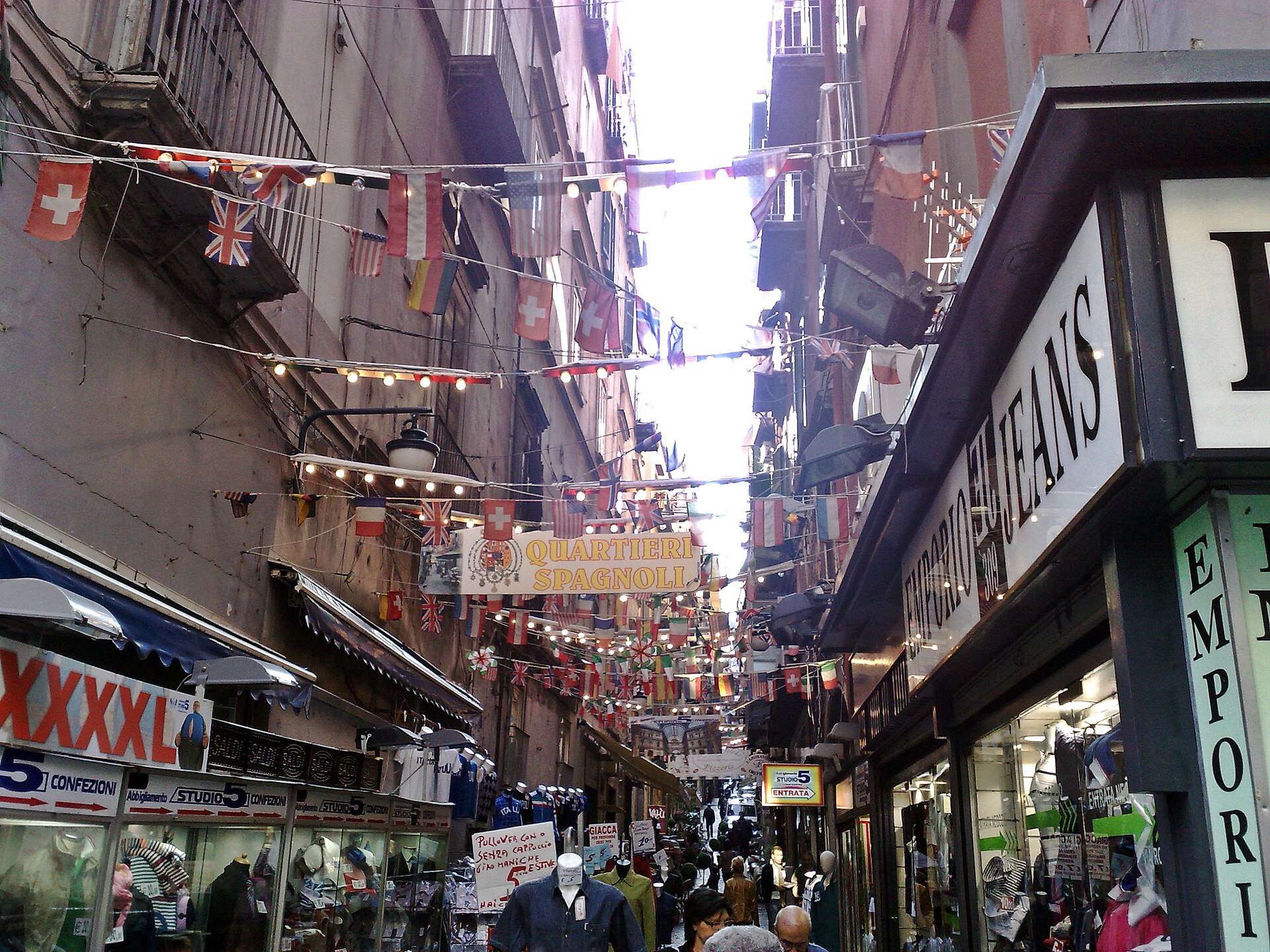
Real photograph · Quartieri Spagnoli, 2023
10
To understand modern Naples, you need to understand why Diego Armando Maradona became much more than a celebrated player here.
He arrived in 1984 and left in 1991. In those seven seasons, Napoli won its first two league titles, the Coppa Italia, the UEFA Cup and the Italian Super Cup. The trophies matter, but the deeper story is how victories over richer northern clubs became a language of dignity, belonging and possibility for the city.
01 · Beyond football
Why Maradona belongs in a Naples culture guide
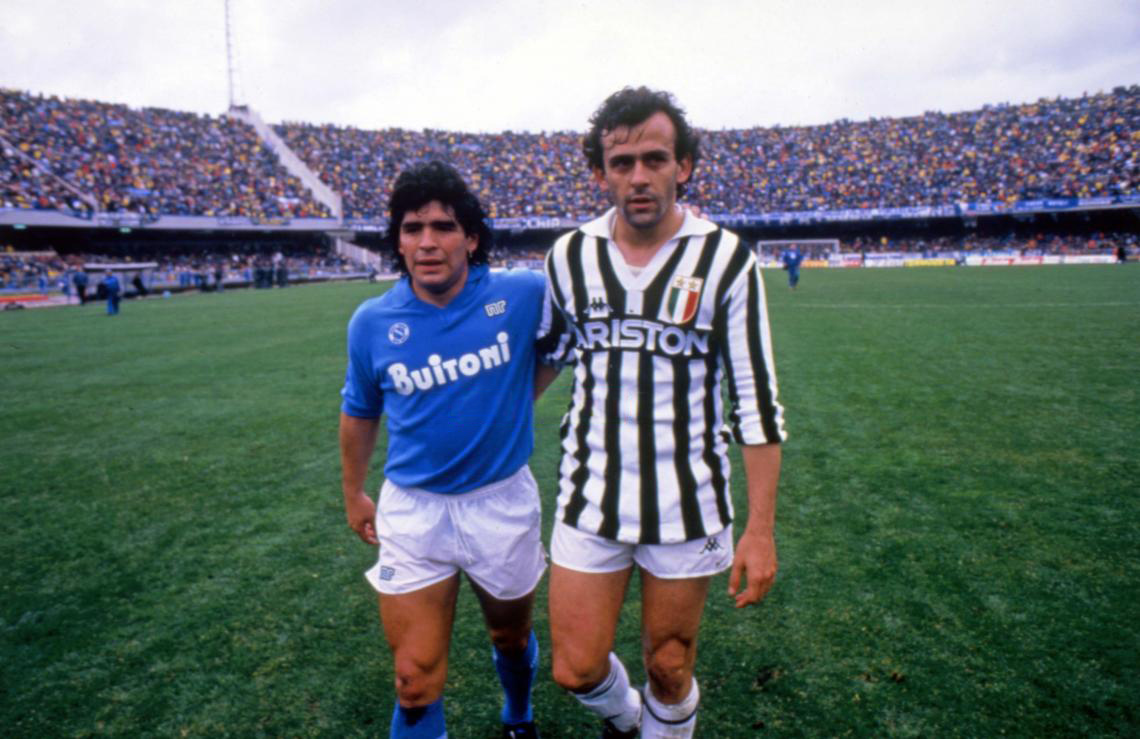
Naples already knew how outside Italy viewed it: brilliant, excessive, poor, southern and endlessly judged. Maradona—an Argentine raised in a working-class neighbourhood—arrived as the world's most magnetic footballer and appeared to recognise that experience of being looked down upon.
When Napoli's 1986–87 side became the first southern Italian team to win Serie A, the result was celebrated as more than a sporting upset. It reversed a familiar hierarchy, at least for a night. The second title in 1990 and the 1989 UEFA Cup turned a magnificent team into a civic era.
“
The city does not remember Diego only through statistics. It remembers how it felt to be seen, represented and victorious.
That memory is not simple sainthood. Maradona's life included genius, vulnerability, controversy and addiction. Naples' public tributes hold those contradictions together: a flawed human being, a sporting artist and a symbol onto whom a city projected hope.
02 · The Naples years
Seven seasons that changed the city
- 5 July 1984
The presentation
Maradona is presented to an enormous crowd at the Stadio San Paolo after transferring from Barcelona. The spectacle announces that Napoli intends to challenge Italy's established order.
- 10 May 1987
The first Scudetto
A 1–1 draw with Fiorentina mathematically secures Napoli's first Serie A title. The club completes a historic league-and-cup double by also winning the Coppa Italia.
- 17 May 1989
European champions
Napoli defeats VfB Stuttgart 5–4 on aggregate to win the UEFA Cup—the club's first major European trophy and Maradona's only continental club title.
- 29 April 1990
A second Scudetto
Napoli wins Serie A again. Mario Filardi paints the now-famous Quartieri Spagnoli mural to celebrate that triumph.
- 1991
The farewell
Maradona's Naples career ends after seven seasons. The relationship continues in memory, song, street imagery and family stories.
- 4 December 2020
The stadium takes his name
After Maradona's death, the Comune di Napoli officially renames the former Stadio San Paolo as the Stadio Diego Armando Maradona.
03 · Quartieri Spagnoli
Largo Maradona and the Mario Filardi mural
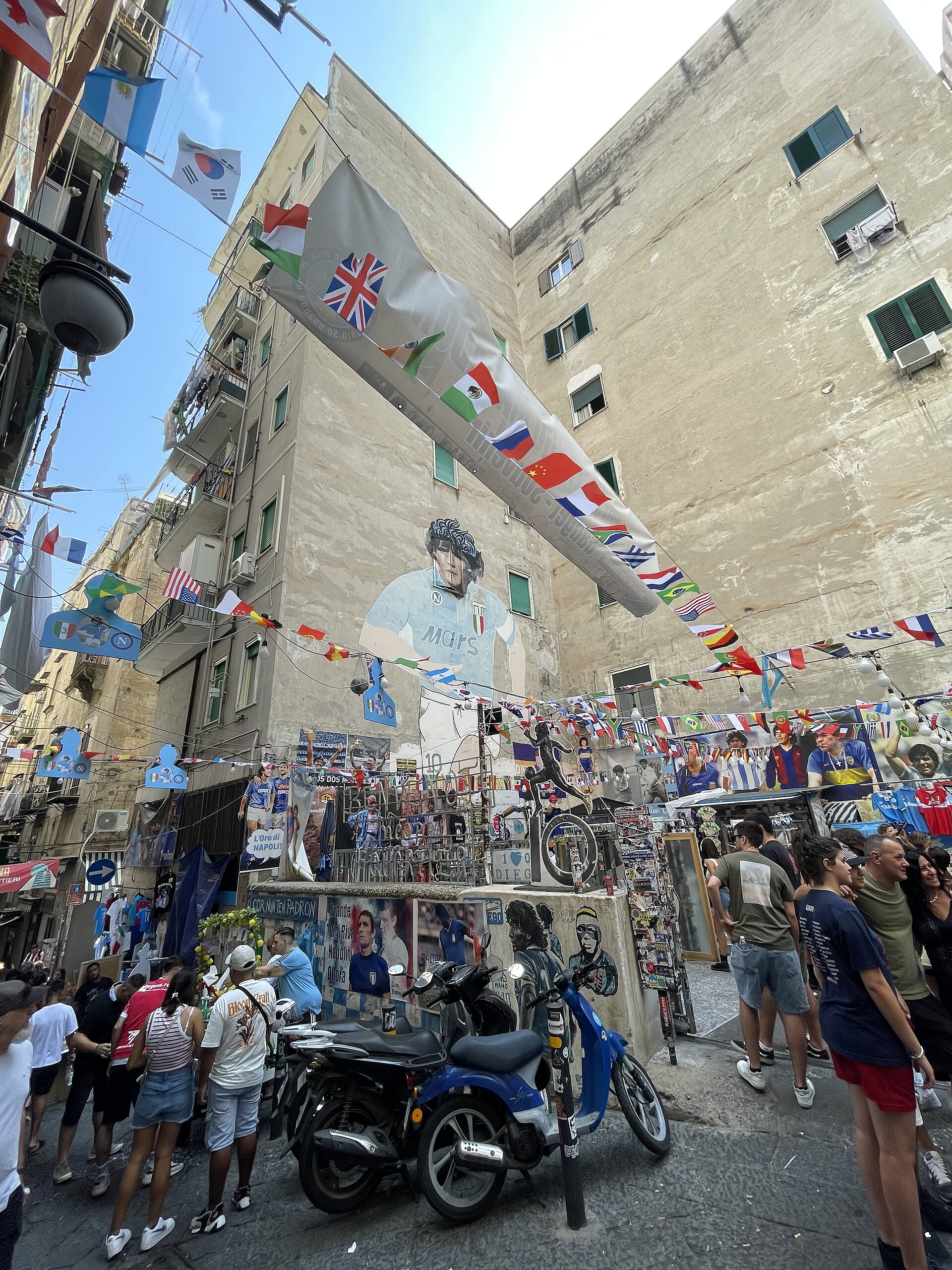
The best-known Maradona mural is high on a residential wall off Via Emanuele De Deo, in a courtyard now commonly called Largo Maradona. Local artist Mario Filardi painted it in 1990 to celebrate Napoli's second Scudetto. Its weathered surface was restored in the 2010s, and the space around it accumulated photographs, scarves, shirts, handwritten messages and small altars—especially after Maradona died in 2020.
Today it is one of Naples' busiest pieces of street culture. Come for the mural, but look closely at the layers below it: Argentina flags, Napoli line-ups, family snapshots and objects left by visitors. The point is not a single masterpiece behind a barrier; it is an evolving collective memorial.
Open in Google MapsFree · outdoors · residential area
04 · The cultural map
Five Maradona places to see in Naples
01
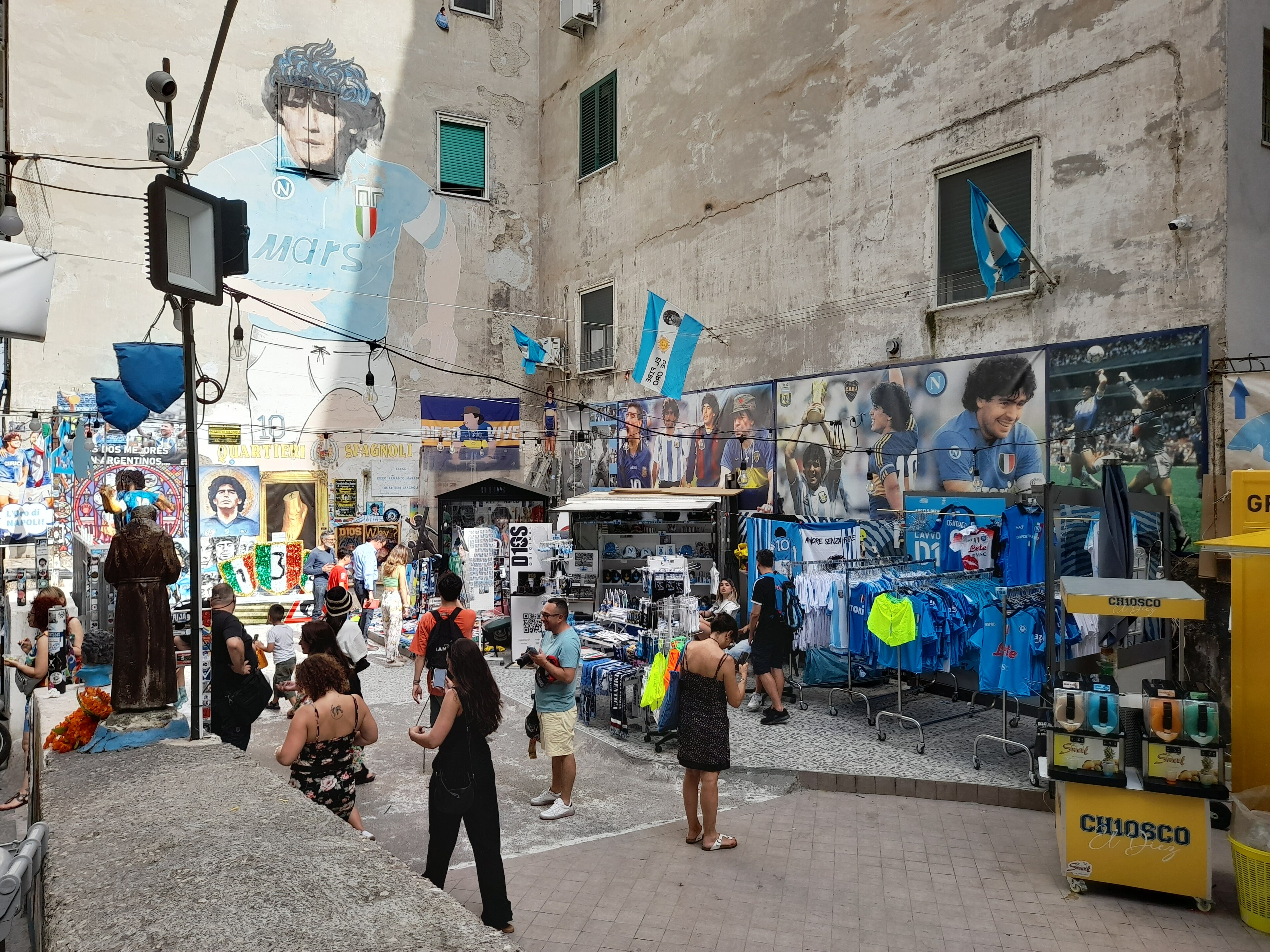
Largo Maradona
The essential stop: Mario Filardi's 1990 mural and the constantly changing popular shrine in Quartieri Spagnoli.
Map the mural ↗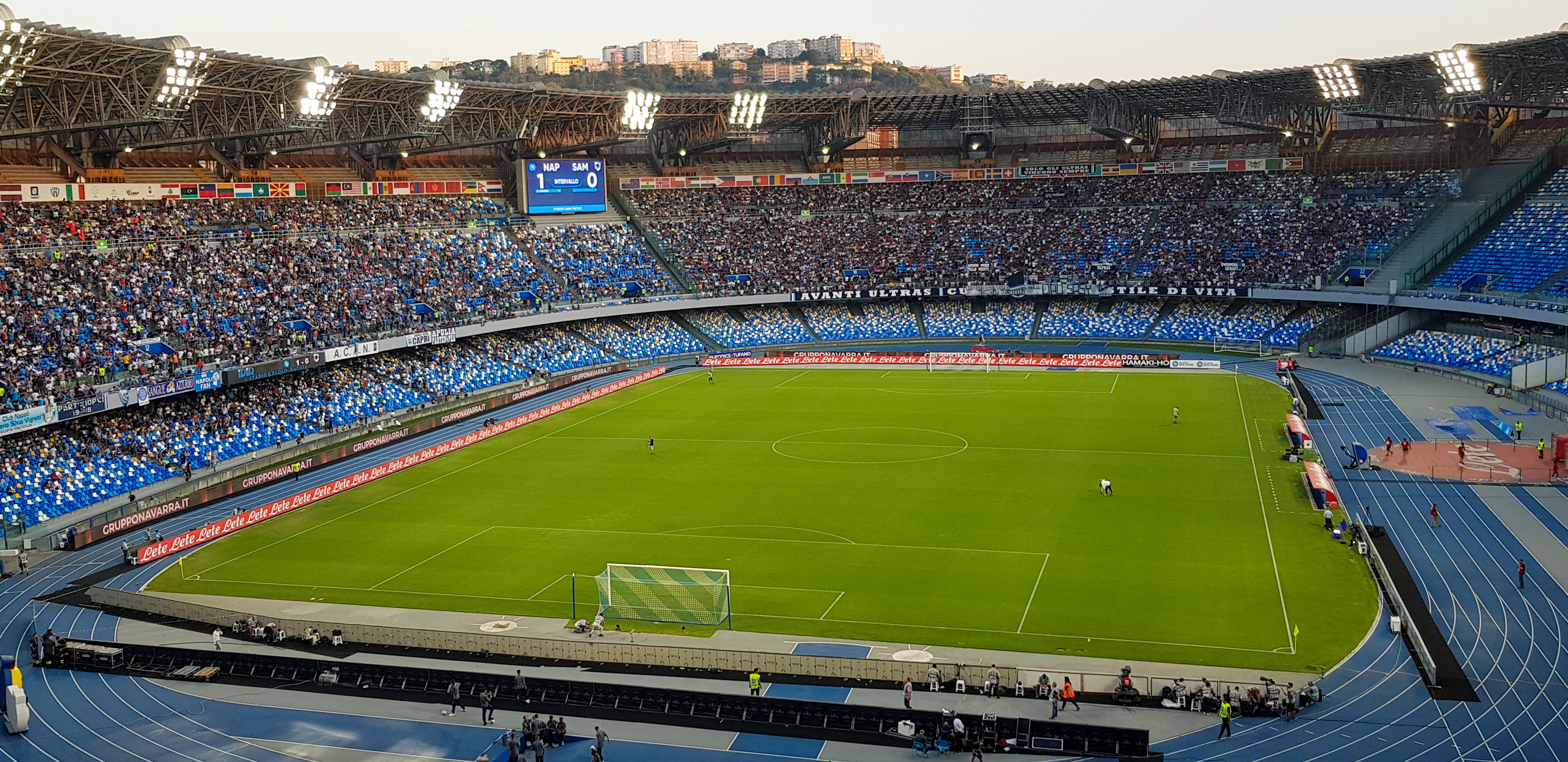
02
Stadio Diego Armando Maradona
The former San Paolo in Fuorigrotta, where Maradona played from 1984 to 1991 and where Napoli's modern mythology took physical form.
Map the stadium ↗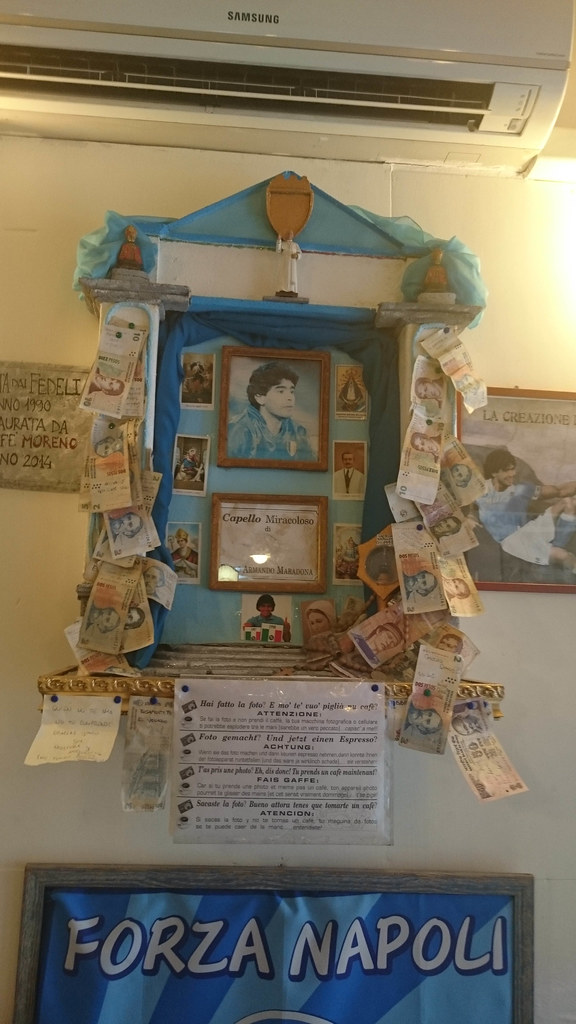
03
Bar Nilo
A compact, eccentric shrine inside a historic-centre café at Via San Biagio dei Librai 129. Buy a coffee before asking to photograph the display.
Map Bar Nilo ↗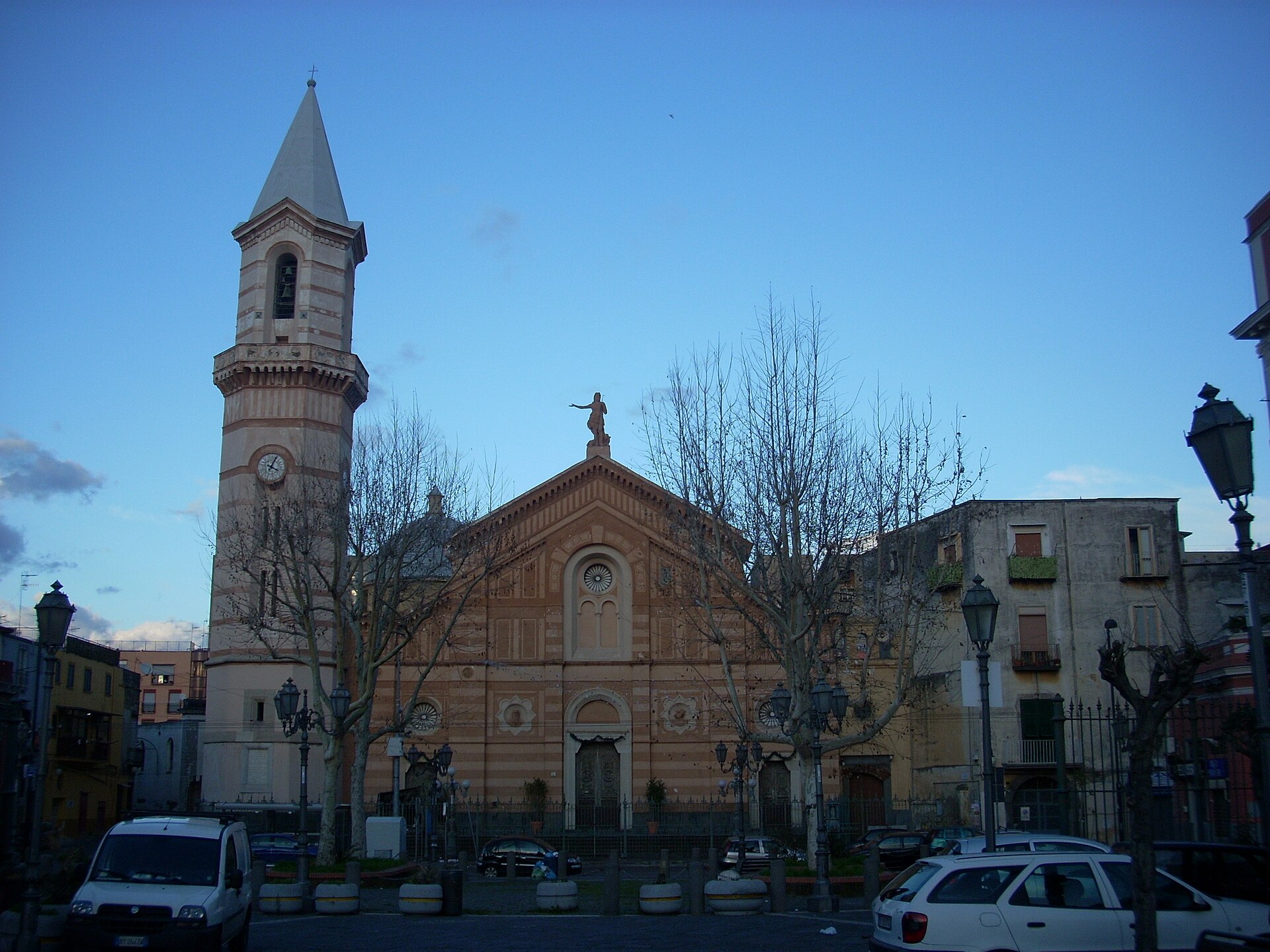
04
Dios Umano by Jorit
A monumental 2017 portrait across a 26-metre housing block at Taverna del Ferro in San Giovanni a Teduccio. The Comune's cultural guide lists it as free and outdoors.
Map the Jorit mural ↗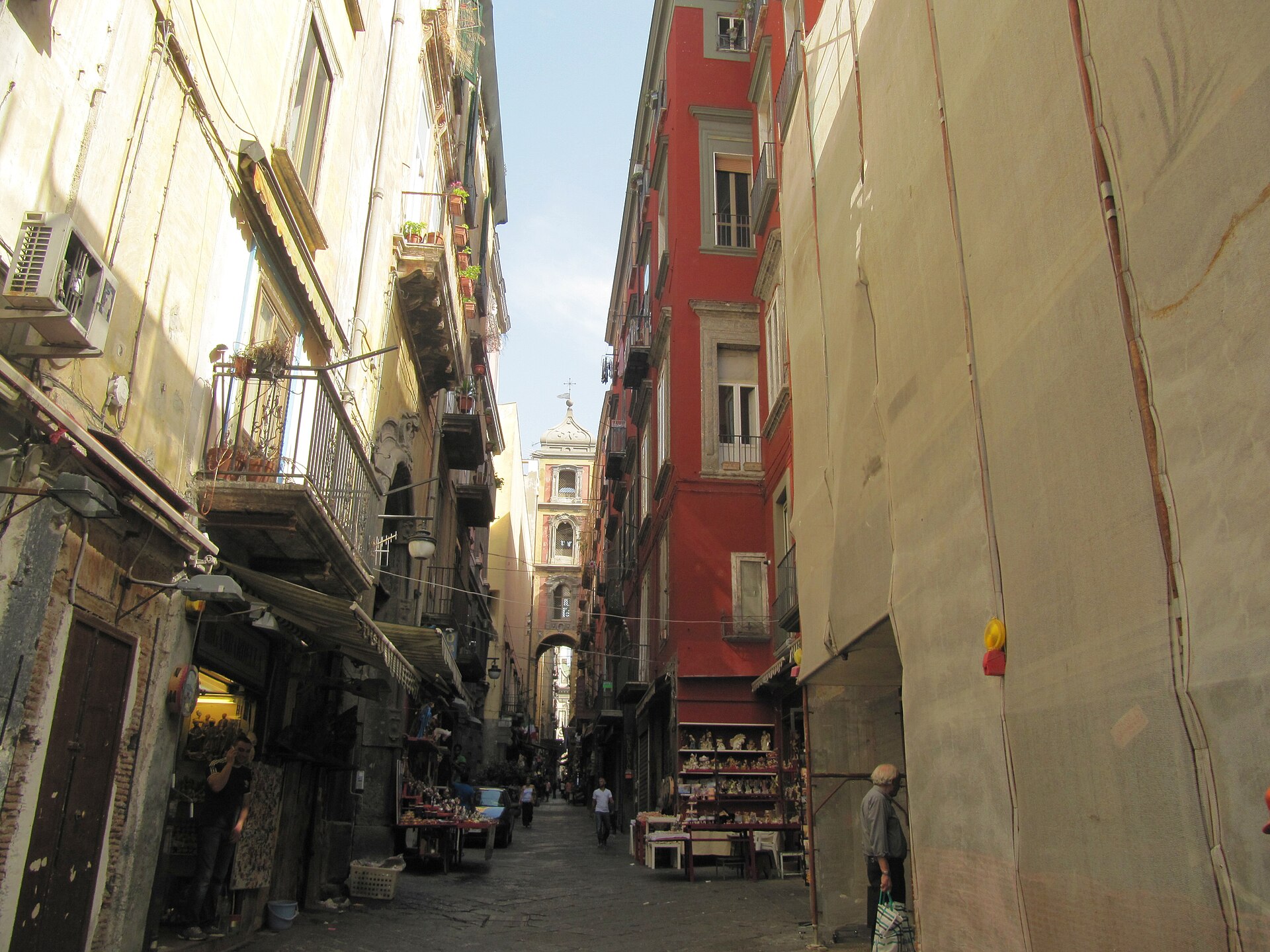
05
San Gregorio Armeno
The presepe workshops fold current life into an old craft. Maradona figurines—sometimes in a Napoli shirt, sometimes with angel wings—show how popular memory enters the Neapolitan nativity tradition.
Map the workshops ↗05 · Fuorigrotta
The stadium where the story happened
Opened in 1959, the stadium was known as the Stadio San Paolo throughout Maradona's career. This is the ground where he was presented in 1984, helped lead Napoli's era-defining sides and produced many of the performances that survive in the city's memory. It officially took his name in December 2020.
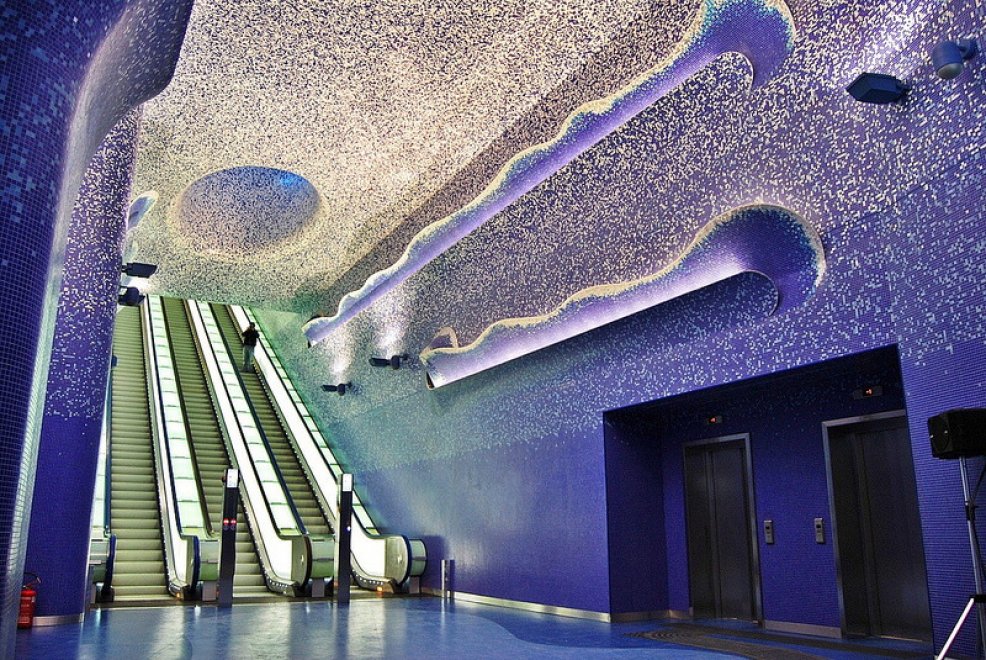
Line 6 to Mostra
From the historic centre, take Line 1 from Duomo to Municipio, change to Line 6 and exit at Mostra. Line 2 to Campi Flegrei is another useful option.
Buy only through official channels
Fixtures, sale phases and identification rules can change. Start with SSC Napoli's official ticket page and carry the identification specified for your ticket.
Read SSC Napoli's stadium history ↗ Check official ticket information ↗
Do not assume a tourRegular public stadium tours are not guaranteed. Check official SSC Napoli and Comune di Napoli information before travelling specifically for interior access.
06 · From Palazzo Nanà
A Maradona half-day without backtracking
- 09:00
Bar Nilo
Walk west along the decumani from Piazza Nicola Amore. Take an espresso and see the small shrine before the historic centre becomes busiest.
- 09:45
San Gregorio Armeno
Loop through the artisan street and look for the footballer among saints, shepherds, politicians and pop-culture figures.
- 10:45
Quartieri Spagnoli
Continue toward Via Toledo and climb to Largo Maradona. Allow time for the mural, tributes and the surrounding lanes.
- 12:15
Choose your final chapter
For the stadium, take Line 1 from Toledo to Municipio and change to Line 6 for Mostra. For Jorit's mural, return toward Garibaldi or Piazza Cavour and use the metropolitan rail connection to Napoli San Giovanni-Barra.
07 · Good guest habits
Visit the shrines respectfully
- Remember the neighboursLargo Maradona is not a purpose-built museum. People live above and beside it; keep entrances, stairs and lanes clear.
- Photograph, do not rearrangeDo not touch, move or remove shirts, notes, candles and personal tributes.
- Support the place fairlyIf you enter a café or private display, buy something before asking for photographs or extended access.
- Watch your belongingsThe mural can become crowded. Close bags, keep phones secure and step aside before checking directions.
- Leave football rivalry elsewhereThese places carry personal memory. Curiosity is welcome; provocative chants and gestures are not.
08 · Quick answers
Maradona in Naples FAQ
Where is the famous Maradona mural?
In the Quartieri Spagnoli, off Via Emanuele De Deo. Search Google Maps for “Largo Maradona” and approach on foot from Via Toledo; the final lanes are narrow and often crowded.
Is Largo Maradona free?
Yes. The mural and public tributes are outdoors. Shops and stalls around the courtyard are independent businesses; looking is free and purchases are optional.
What is the best time to visit?
Go on a weekday morning for more space and softer street activity. Weekend afternoons, match days and celebrations can be extremely busy.
Can I visit the Maradona stadium?
You can see the exterior and attend a match with a valid ticket. Interior tours are not consistently available, so verify official information rather than relying on third-party listings.
What did Maradona win with Napoli?
During his 1984–91 spell, Napoli won Serie A in 1986–87 and 1989–90, the Coppa Italia in 1986–87, the UEFA Cup in 1988–89 and the Italian Super Cup in 1990.
Is this page affiliated with SSC Napoli or the Maradona estate?
No. This is an independent cultural and visitor guide published by Holidays a Napule.
09 · Read further
Official and specialist sources
- SSC Napoli — history of the stadium
- UEFA — Maradona's European performances for Napoli
- Comune di Napoli — the stadium renaming, 4 December 2020
- Comune di Napoli / NapoliForMe — Jorit's Dios Umano
- Italia.it — San Gregorio Armeno and the presepe tradition
Addresses, access and public-transport service can change. Links and practical information were checked on 14 October 2026.
 Read every district
Neighbourhoods
Understand the moods and landmarks of Naples, block by block.
 Plan the trail
Metro & bus
Build a live Google Maps journey from your location to the mural, stadium or anywhere else.
Stay in the historic heart
See the culture.
Sleep in the story.
Palazzo Nanà puts you beside Duomo Metro and within walking distance of the centro storico.