
01 · Centro Storico
Start where the city began
1. Follow Spaccanapoli
This east–west line slices through the old centre and is the best introduction to Naples on foot. The name describes what it appears to do from above—split the city—even though the route changes street names along the way.
2. Walk Via dei Tribunali
The parallel decumanus is busier, louder and packed with churches, pizzerias and glimpses into courtyards. Walk it once in daylight and again in the early evening.
3. Visit the Duomo and San Gennaro chapel
Naples Cathedral combines layers of architecture with the intense civic devotion surrounding the city’s patron saint. Dress respectfully and allow time for the royal chapel.
4. See Santa Chiara’s cloister
Behind a relatively austere Gothic basilica lies a colourful cloister lined with eighteenth-century majolica tiles. It is one of the centre’s best calm spaces.
5. Take in Gesù Nuovo
The dark diamond-point façade gives no hint of the exuberant Baroque interior. Piazza del Gesù also makes a useful pause between Santa Chiara and Spaccanapoli.
6. Browse San Gregorio Armeno
The narrow street of nativity-scene workshops is busiest before Christmas but fascinating year-round. Go early if you want to examine the craft rather than move with a crowd.
7. Step into Pio Monte della Misericordia
Caravaggio’s Seven Works of Mercy remains in the institution for which it was painted. It is a concentrated, powerful visit near the Duomo.
02 · Art & archaeology
Masterpieces with context
8. Reserve the Cappella Sansevero
The Veiled Christ is astonishing in person, but the chapel is much more than a single sculpture. Timed entry is often essential; use the official museum website.
9. Give MANN half a day
The National Archaeological Museum holds mosaics, frescoes and sculpture from Pompeii and Herculaneum. Visiting before an archaeological day trip will transform what you notice on site.
10. Explore Capodimonte
A former Bourbon palace above the city houses major Italian paintings and decorative arts, surrounded by a large park. It deserves a dedicated half-day rather than being squeezed between central sights.
11. Find contemporary Naples at MADRE
The city’s contemporary-art museum brings a completely different visual language into a historic palace close to the Duomo area.
12. Look at the metro stations
Line 1’s art stations place installations, architecture and design into the daily transport network. Toledo is the most famous, but Municipio, Università and others reward attention.
03 · Below street level
Meet the other Naples
13. Tour ancient cisterns and tunnels
Organised underground routes reveal Greek and Roman excavations, water systems and wartime shelters. Choose one reputable tour rather than trying to see every subterranean site.
14. See Roman Naples at San Lorenzo Maggiore
Below the complex is an excavated Roman market street—an unusually clear way to understand the layers under Via dei Tribunali.
15. Visit the Catacombs of San Gennaro
In the Sanità district, broad early-Christian catacombs hold frescoes, mosaics and an important community story. Pair the visit with the neighbourhood above.
04 · Monumental & royal
See the grand city face
16. Cross Piazza del Plebiscito
The enormous open square links the Royal Palace and the colonnades of San Francesco di Paola. It is at its most atmospheric early or toward sunset.
17. Walk through Galleria Umberto I
A monumental iron-and-glass arcade near Teatro di San Carlo, best appreciated by looking upward from the centre of the crossing.
18. Visit the Royal Palace
The state apartments and historic interiors tell the story of Naples as a European capital, not merely a stop on a modern Italian route.
19. Circle Castel Nuovo
The fortress’s triumphal arch and harbour position make it one of the city’s defining silhouettes. Even a short exterior visit helps connect the centre with the port.
05 · Height & horizon
Find the city’s breathing spaces
20. Look down from Castel Sant’Elmo
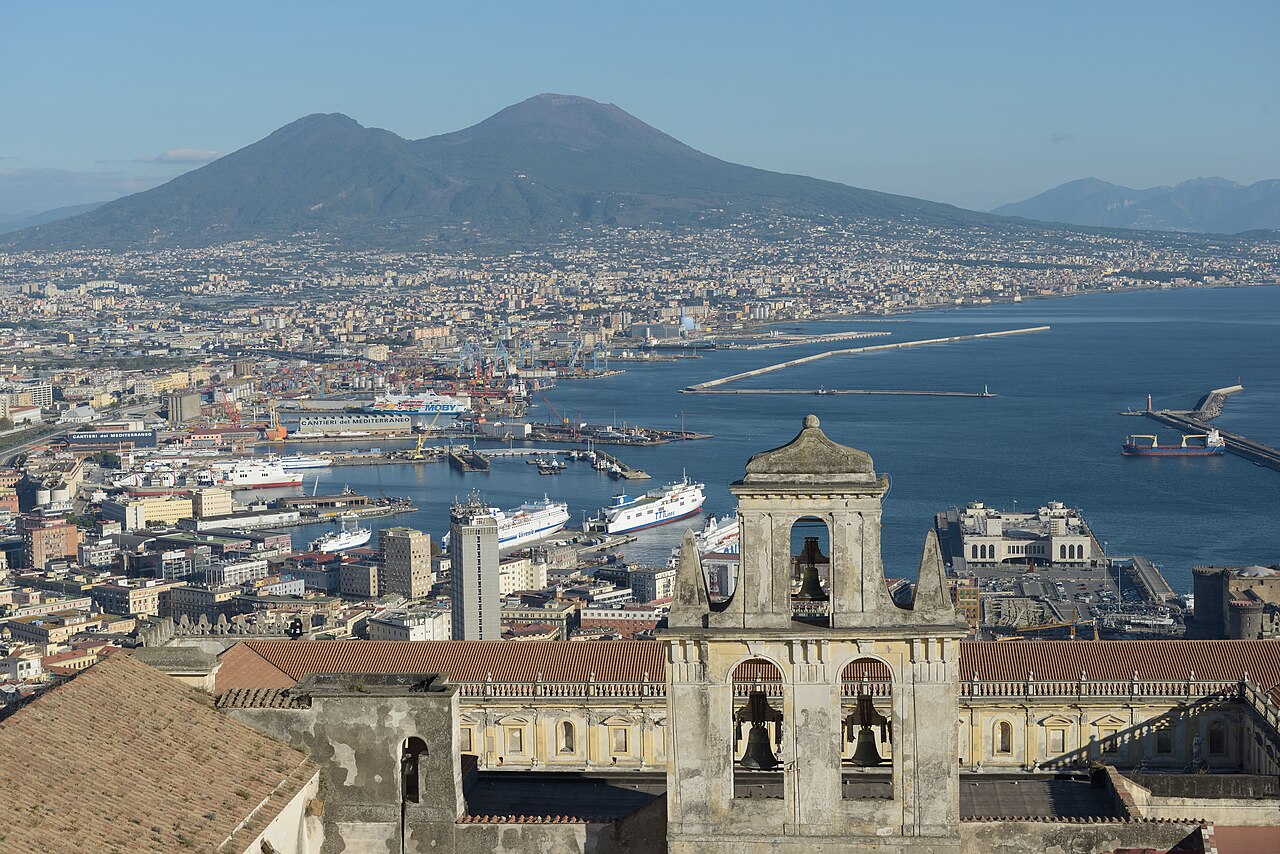
The star-shaped fortress in Vomero provides a near-360-degree reading of the bay, street grid and Vesuvius. Reach the upper district by funicular or Metro Line 1.
21. Visit the Certosa di San Martino
Next to Sant’Elmo, the former monastery combines rich interiors, local history and exceptional terraces.
22. Walk the lungomare
The seafront between Santa Lucia, Castel dell’Ovo and Mergellina is Naples at its most open. Go near golden hour and resist the urge to hurry.
23. Explore Borgo Marinari
The tiny harbour settlement beneath Castel dell’Ovo feels distinct from the dense centre and works well for an evening stroll.
06 · Everyday city
Make room for local rhythm
24. Choose a market
Pignasecca is central and lively; Porta Nolana is strong for fish and produce; Vergini brings you into Sanità. Morning is usually the most rewarding time.
25. Sit in a piazza with nothing scheduled
This is not filler. Naples makes sense through observation: deliveries, greetings, football debates, church bells, children and the evening passeggiata. Piazza Bellini, Piazza del Gesù and Piazza San Domenico Maggiore all invite a pause.
07 · Build your day
How to choose without overplanning
- First visitDuomo, Spaccanapoli, Cappella Sansevero, Toledo and the waterfront.
- Art loverMANN, Capodimonte, Pio Monte della Misericordia and MADRE.
- With childrenCastles, a short underground route, funicular rides, seafront space and plenty of snack stops.
- Rainy dayMANN, churches, Sansevero, Galleria Umberto I and a long traditional lunch.
 Put it together
 Between sights